




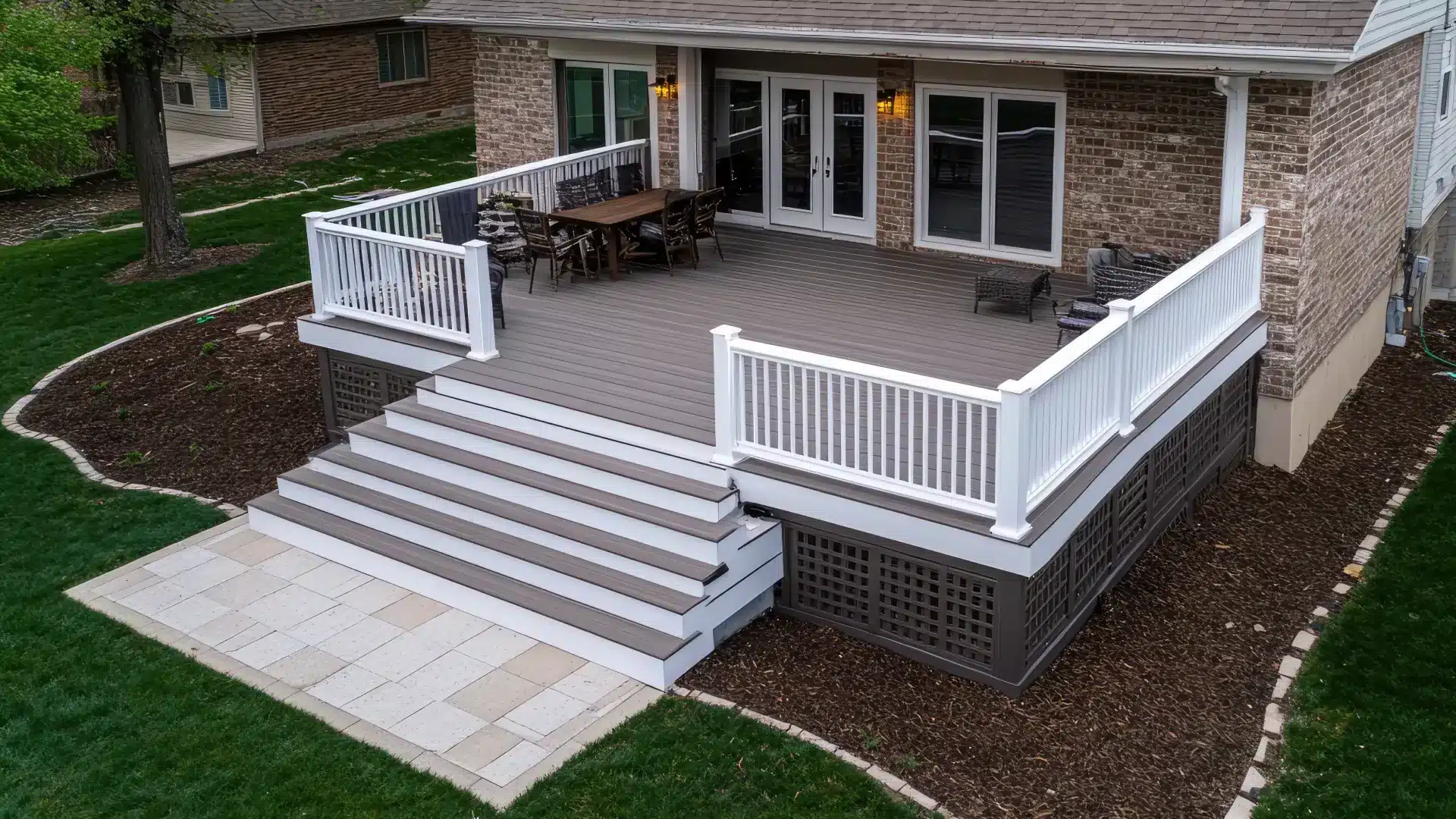
Deck skirting can give an elevated deck a more finished appearance while helping the space beneath it blend with the rest of the property. However, the installation requires more planning than simply covering the open area around the deck. Small mistakes with ventilation, measurements, materials, drainage, or access can affect both the appearance and performance of the finished project.
Whether you are planning a new deck or adding skirting to an existing structure, understanding common installation mistakes can help you make better decisions. Here are several issues homeowners should consider before starting a deck skirting project.
Failing to Plan for Proper Ventilation
One of the most important considerations is airflow beneath the deck. Closing off the area too tightly can limit air circulation and create an environment where moisture has fewer opportunities to dissipate.
Lattice designs can provide an open appearance while allowing airflow through the skirting. More solid designs may require careful planning to ensure the space beneath the deck still receives adequate ventilation.
Before choosing a style, consider how air moves around the deck and whether the proposed design leaves enough openings. Proper planning can help the finished installation look intentional without unnecessarily restricting airflow.
Installing Too Close to the Ground
Another common mistake is positioning the skirting directly against the ground. Soil, grass, mulch, and other landscaping materials can retain moisture and come into contact with the bottom edge of the material.
A small amount of clearance can help keep the skirting from sitting directly in wet soil. However, the appropriate arrangement depends on the property, terrain, and selected material.
The ground around a deck may also be uneven. Installing panels without accounting for changes in elevation can result in awkward gaps or an uneven bottom edge. Measuring the terrain before installation can help create a cleaner appearance.
Ignoring Drainage and Moisture
Water management should be part of the planning process. Rainwater can collect around low areas beneath and around a deck, especially where the ground does not drain efficiently.
Installing skirting without considering existing drainage patterns can create unnecessary moisture concerns. Homeowners should look at where water naturally flows and whether the planned design could interfere with drainage.
The goal is not to create a completely sealed enclosure. Instead, the installation should work with the existing property conditions. A thoughtful layout can help the area beneath the deck remain accessible and appropriately ventilated while avoiding unnecessary contact with standing water.
Choosing the Wrong Materials or Style
Not every skirting material or design works equally well for every deck. The appearance of the deck, the home’s exterior, surrounding landscaping, and local weather conditions can all influence the right choice.
Double Eagle Fence offers options that include lattice panels, solid wood boards, and horizontal or vertical board styles. Each creates a different visual effect, so homeowners should consider how the skirting will complement the existing structure.
Material selection also deserves attention. A homeowner should consider how the material will respond to outdoor conditions and seasonal temperature changes. Choosing an option simply because it looks appealing in a sample may lead to disappointment if it does not suit the deck or surrounding property.
The best design is one that works visually with the home while also making sense for the conditions around the deck.
Measuring Poorly or Blocking Access
Accurate measurements are essential for a clean installation. Rushing this step can result in panels that are too short, sections that do not align, or unnecessary material waste.
Measure the entire perimeter rather than assuming every section has the same dimensions. Changes in ground level, stairs, posts, corners, and other features can affect the layout.
Homeowners should also think about access before covering the space beneath the deck. Utility connections, storage areas, and other features may need to remain reachable. An access panel or removable section can provide a practical solution without requiring an entire portion of the skirting to be removed.
Planning access points in advance is much easier than trying to create them after installation.
Overlooking Appearance and Seasonal Changes
A deck may look attractive on its own, but the skirting should also fit naturally with the home’s exterior. Color, orientation, spacing, and overall design can influence how well the finished project blends with the property.
For instance, horizontal boards can create a more contemporary appearance, while vertical boards may suit a more traditional home. Lattice can provide a more open visual effect. The right choice depends on the home’s existing architecture and the homeowner’s preferences.
Seasonal changes also deserve consideration. Outdoor materials can expand and contract as temperatures change. Installation should account for this movement rather than treating the material as if its dimensions will remain exactly the same throughout the year.
Planning for seasonal conditions can help reduce the risk of buckling, warping, or gaps developing over time. Careful measurements, appropriate spacing, and suitable installation methods all contribute to a better result.
Plan Your Deck Skirting Project Carefully
Deck skirting can be a useful finishing element for some elevated decks, but the installation should be approached as part of the overall outdoor design. Ventilation, drainage, ground clearance, access, measurements, material selection, and appearance all deserve attention before work begins.
A carefully planned project can also make it easier to choose a style that complements the home instead of making the skirting look like an afterthought. Double Eagle Fence provides custom residential deck skirting options, including lattice, solid wood, and horizontal or vertical board designs.
If you are considering a deck skirting project and want to discuss your options, contact Double Eagle Fence at (214) 530-9444. A conversation about your deck, property, and preferred style can help you determine an approach that fits your needs.